Transmission Service and Repair in North Bay
AutoNorth Auto Repair is a licensed North Bay shop handling transmission repairs and fluid service on gas and diesel vehicles at 1520 Cholette St. Slipping, harsh or delayed shifts, a shudder at highway speed, a burnt smell or a transmission warning light are all worth getting diagnosed early, because a transmission that is still warning you is a better problem than one that has stopped. AutoNorth finds out what is actually wrong, documents it with photos and video, and quotes the work before anything starts.
Last updated August 7, 2026
How Much Does Transmission Service Cost in North Bay?
Transmission work covers an enormous range, from a routine fluid service on a vehicle that is behaving perfectly to a repair on a unit that is already slipping, so a number quoted down the phone would be a guess dressed up as an answer. AutoNorth Auto Repair finds out which of those you are actually dealing with first, then quotes the work before any of it starts.
- Service or repair. This is the fork that decides everything else. Routine fluid service and a repair on a unit that is already misbehaving are different jobs with very different bills, and only a look at the vehicle sorts one from the other.
- What the unit takes. Automatic transmission fluids are not interchangeable. Manufacturers specify a fluid by name, and modern automatics are built tightly enough that the wrong one causes real problems rather than merely voiding a paragraph in the manual.
- How much of it goes in. Capacity varies a lot between a small front-wheel-drive automatic and a heavy-duty pickup, and volume is a real part of the invoice.
- Whether there is a pan and a filter. Some vehicles have a serviceable filter and a drop pan with a gasket. Others are sealed units with a drain plug and no dipstick at all. That changes both the labour and the parts.
- Gas or diesel. Diesel work trucks run heavier drivetrains, hold more fluid, and generally live harder lives. AutoNorth services both.
- What the diagnosis turns up. A shudder can be a fluid problem or a mechanical one. Until the fault is identified, anyone quoting you a firm price is quoting you a story.
Call AutoNorth with your year, make and model and a description of what the vehicle is doing, and the shop will tell you what it is likely looking at and what it takes to know for certain. Third-party financing is available through AT Clarke Enterprises through AutoNorth for larger repairs, which is worth asking about early rather than after the estimate lands.
How Do You Know You Need Transmission Service?
A transmission almost always warns you before it quits. Slipping, harsh or delayed shifts, a shudder at steady speed, a whine that rises with the road, a burnt smell, or a warning light on the dash are all reasons to get it looked at now rather than after it leaves you sitting on the shoulder of Highway 11.
- Slipping. The engine revs climb but the vehicle does not gather speed to match, as though the drivetrain briefly let go. Slipping generates heat, and heat is what damages a transmission, so this symptom tends to make itself worse.
- Harsh or delayed shifts. A pause before Drive or Reverse engages, or a shift that lands like a thump. Both are worth a diagnosis rather than a habit of allowing for them.
- A shudder at steady speed. Usually felt as a fine vibration at cruising speed, often described as driving over rumble strips that are not there. On many automatics this points at the torque converter clutch.
- A whine or hum that tracks road speed. Noise that rises and falls with wheel speed rather than with engine revs narrows things down considerably for whoever is diagnosing it.
- A burnt smell. Fluid that has been cooked smells burnt and turns dark, where healthy automatic fluid is usually red and reasonably clear. On vehicles that still have a dipstick it is one of the quickest checks there is.
- Red or brown fluid on the driveway. Transmissions are not supposed to leak, and a low fluid level is both a common reason one starts behaving badly and one of the more fixable ones.
- A warning light or a limp mode. Modern transmissions are computer-controlled and store fault codes. A vehicle that suddenly refuses to shift above a certain gear has usually decided to protect itself.
None of the above is a diagnosis on its own. They are the reasons to book. AutoNorth scans the vehicle, checks the fluid, and works out which of these you actually have before a single part gets ordered.
When Should Transmission Fluid Be Changed?
Start with the interval in your owner's manual, then shorten it if the vehicle tows, hauls, sits in traffic, or otherwise works for a living. Heat is what wears transmission fluid out, and anything that makes the transmission work harder makes heat.
- Towing and hauling shorten the interval. Pulling a trailer up a grade puts far more load through the transmission than the same trip empty. Most manufacturers publish a severe-service schedule for exactly this, and a lot of North Bay driving qualifies for it.
- Stop-and-go traffic counts too. A transmission slipping in and out of gear at low speed with little airflow over the cooler runs hotter than one cruising at a steady 90.
- "Lifetime fluid" is a phrase, not a fact. Plenty of modern vehicles are sold with sealed transmissions and no published fluid interval. That does not mean the fluid stops degrading. Ask what your specific vehicle actually calls for.
- Condition beats the odometer. Fluid that has gone dark and smells burnt is telling you something the mileage chart cannot.
What transmission fluid is actually doing in there
Transmission fluid does more jobs than engine oil does. In an automatic it is a hydraulic fluid, carrying the pressure that applies clutches and holds gears. It lubricates gears, bearings and bushings. It is a coolant, moving heat out to a cooler at the front of the vehicle. It is a friction modifier, tuned so the clutch packs grab at the right rate rather than slamming or slurring. And in most automatics it is the medium inside the torque converter that connects the engine to the drivetrain in the first place.
Ask one fluid to do five jobs at temperature for years and it degrades. Heat oxidises it. Clutch material and normal wear metal end up suspended in it. The friction modifiers break down, which is why an ageing automatic often starts shifting differently long before anything is broken. Get far enough along and the fluid stops carrying heat away properly, which accelerates everything else.
Manual transmissions use gear oil instead, and it lives an easier life because it is not doing the hydraulic or friction work. It still shears down, still collects wear metal, and still has an interval. Manual gearboxes are simply better at suffering in silence.
Fluid Service vs Waiting for a Repair: Which Are You Choosing?
Almost every driver picks one of these two, and most pick the second one by accident. Servicing the fluid on schedule is maintenance you plan around. Waiting until the transmission misbehaves turns the same component into a repair you plan nothing around.
| Fluid service vs waiting for a repair | Servicing the fluid on schedule | Waiting until something goes wrong |
|---|---|---|
| What triggers it | The manufacturer's schedule, or fluid that has gone dark and smells burnt | A symptom: slipping, a shudder, a harsh shift, or a warning light |
| Cost | Lower, because it is routine maintenance on a healthy unit | Higher, because you are now paying to diagnose a fault as well as fix it |
| What it addresses | Fluid that is losing its ability to lubricate, cool and hold pressure | Damage that tired fluid may well have helped along |
| How predictable it is | Entirely. It is scheduled work on a vehicle that is behaving normally | Unknown until the fault is properly diagnosed |
| Where it usually leads | Back onto the maintenance schedule for next time | A repair, and sometimes a harder conversation about the whole unit |
| Best for | Anyone keeping the vehicle, and anyone towing, hauling or driving it hard | Nobody chooses this one. It is where you end up by default |
One honest caveat, because it gets repeated wrongly in every parking lot in town: fresh fluid does not repair worn clutch material, and no service reverses wear that has already happened inside the unit. Servicing fluid on time is about not getting there. If your transmission is already slipping, the fluid is a question to answer during the diagnosis, not a fix to hope for.
Where to Get Transmission Service in North Bay
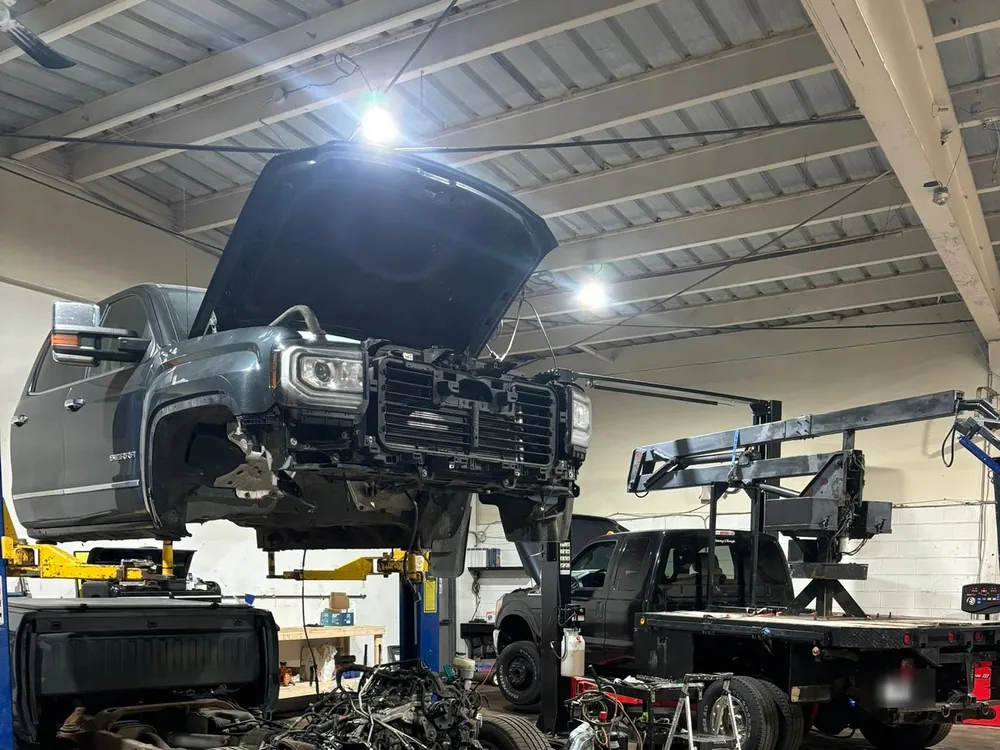
AutoNorth Auto Repair handles transmission repairs and fluid service on gas and diesel vehicles at 1520 Cholette St in North Bay, on cars, light trucks and work vehicles. The shop has been servicing all makes and models from that address since it opened in September 2025.
- The diagnosis comes first. Codes get scanned, the fluid gets checked, and the symptom gets reproduced where it can be. Guessing at a transmission is an expensive hobby.
- You see it before you approve it. AutoNorth's digital inspection sends the findings to your phone by both text and email, with photos and video explaining each recommendation, grouped by priority. You approve or decline each item from your phone or computer without having to call.
- Nobody is paid to find work. AutoNorth's technicians are dealership-trained and paid straight time rather than flat rate, so no one at the shop earns more by discovering an extra repair or by hurrying yours.
- Extended warranty claims. Transmission faults are among the most common extended warranty claims there are, and AutoNorth is a certified repair facility for Canada General and Global Warranty. See the extended warranty repairs page for how a claim runs.
- Work trucks and fleets included. Company vans, contractor trucks and government and municipal fleet vehicles go through AutoNorth's fleet services, with the same inspection reporting.
- A ride if you need one. AutoNorth runs a customer shuttle, including rides home, so a vehicle staying at the shop does not have to mean a day written off.
Automatic or manual: what each one asks of you
An automatic does its own thinking, which is exactly why it needs more looking after. It runs a torque converter, a valve body, clutch packs and a control module, all depending on clean fluid at the right pressure. When one starts behaving oddly, the fluid and the electronics are both suspects, and separating the two is most of the diagnostic work.
A manual is simpler and asks for less, but it is not maintenance-free. Gear oil has an interval. The clutch is a wear item, and a slipping clutch feels remarkably like a slipping automatic from the driver's seat while being a completely different repair. Grinding on a particular gear, a pedal that has gone soft, or a shifter that has developed opinions are all worth describing to the shop rather than driving around.
Either way, the most useful thing you can do is describe the symptom precisely: what speed, what gear, hot or cold, every time or only sometimes. That description saves real diagnostic time, and it is free to give.
Is It the Transmission or the Driveline?
Not every vibration or clunk that feels like a transmission is one. The driveline that carries power from the transmission out to the wheels has its own failure points, and from the driver's seat the symptoms overlap almost completely with transmission symptoms.
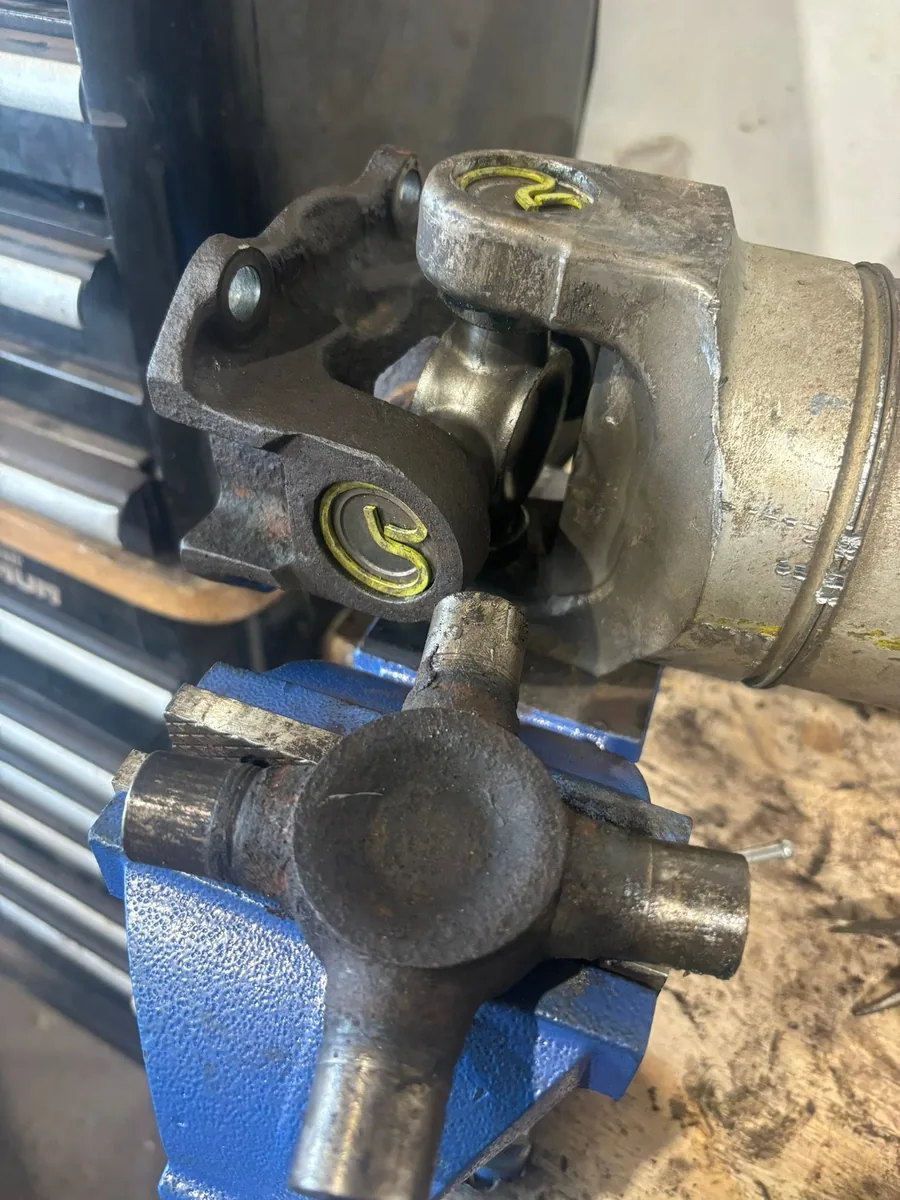
- Universal joints. The joints at each end of a driveshaft let it turn while the suspension moves. When the needle bearings inside dry out and wear, you get a clunk on take-up and a vibration that grows with road speed. Salt does them no favours.
- The driveshaft itself. A shaft out of balance, dented, or running a tired centre support bearing produces a speed-related vibration that is easy to blame on the transmission.
- Differentials. A worn differential typically howls or whines, and the noise often changes between coasting and pulling. Gear oil in there has an interval too, and on trucks it is frequently overdue.
- Axle shafts and CV joints. On front-wheel and all-wheel drive vehicles, a clicking through a tight turn usually points at an outer CV joint rather than anything inside the transmission.
- Telling them apart is a diagnosis. Describe the symptom to AutoNorth and the shop will tell you what it can do and what it takes to find the source.
Transmission Service: Common Questions
Does AutoNorth do transmission work on diesel trucks?
Yes. AutoNorth handles transmission repairs and fluid service on gas and diesel vehicles at 1520 Cholette St in North Bay. Diesel work trucks and vans can also run through AutoNorth's fleet services alongside their other maintenance. Call (705) 472-6060 with your year, make and model.
Is a transmission flush the same as a fluid change?
Not quite. A fluid change drains what will come out and refills it, and on many vehicles that also means dropping the pan and replacing a filter. A flush uses a machine to push far more of the old fluid out of the system. Which one your vehicle should get depends on what the manufacturer specifies and on the condition of the fluid, so ask AutoNorth what it recommends for yours.
How long can I keep driving with a slipping transmission?
That is not a question anyone can answer from a distance, and slipping is the worst symptom to gamble on. A transmission that slips is not holding the power it is being given, and the heat that creates tends to make the situation worse the longer it goes on. Get it looked at rather than driven on. Call AutoNorth at (705) 472-6060 or text (705) 571-4391.
Why does my vehicle shudder at highway speed?
A fine shudder at a steady cruising speed is often the torque converter clutch, which is a transmission component. A vibration that grows with road speed can just as easily be a worn universal joint or an unbalanced driveshaft, which is driveline rather than transmission. They feel similar from the driver's seat and they are not the same repair, so AutoNorth diagnoses which one it is before quoting anything.
What happens if my transmission needs more than a repair?
AutoNorth diagnoses the fault first and documents it with photos and video through its digital inspection, so you get a clear picture of what is actually wrong before you decide anything. If it turns out to be bigger than a repair, you are told that straight rather than finding out halfway through. Call AutoNorth at (705) 472-6060, describe what the vehicle is doing, and the shop will tell you what it can do.
Get the Transmission Looked At Before It Strands You
Call AutoNorth and describe what the vehicle is doing. The shop will tell you what it is likely looking at, and quote the work before anything starts.